
Oakton Resident Lookup Coverage
Oakton has no city clerk of its own. The community is unincorporated, so the useful records sit with Fairfax County and Virginia custodians. A resident lookup works best as a set of narrow checks rather than one search. The property record may name the assessed owner of a parcel. Fairfax tools such as MAR and Jade pin down the county's address and parcel geography. A court index, vital record, license, or business filing can add a dated identifier, but no single source proves who lives at an address now.
| Record | What It Confirms | Where | Access |
|---|---|---|---|
| Assessment/property | Displayed owner, situs and mailing fields, parcel, legal description, and assessment snapshot | Fairfax iCare | Free public search; owner display may be withheld online |
| Address and map | Normalized address, PIN, ZIP, subdivision, district, and current or historic status | Fairfax MAR and Jade GIS | Free map and address tools; not household proof |
| Deed/instrument | Grantor, grantee, recording data, legal description, and prior-transfer leads | Fairfax Land Records, HRC, CPAN | Research Room or subscription; copies and images vary |
| Court index | Party role, case number, docket, hearing, and public charge leads | Fairfax eCaseSearch and participating OCIS courts | Free indexes with document and confidentiality limits |
| Vital record | Date, place, or relationship lead from a birth, death, marriage, or divorce record | VDH, Fairfax offices, HRC, and LVA | Public-period, identity, and relationship rules apply |
| License or entity | Credential or filing status under the named board or entity | DPOR, DHP, and SCC | Status search does not establish a home address |
Start with the identifier least likely to hit a namesake. A parcel PIN, full address, age range, event date, or case number beats a name alone. Names repeat; those anchors do not. Write down the source, the jurisdiction, the date, and the exact spelling as you go. That small record of method lets an Oakton resident lookup be repeated or corrected later.
Oakton Address Lookup Evidence
Begin with the Fairfax Master Address Repository. MAR normalizes the street number and street name. It also normalizes the type, unit, ZIP, parcel PIN, subdivision, district, and address-status dates. Switch between its current, historical, and all-status views. That keeps an old address from being silently treated as current. Then carry the returned parcel into iCare and Jade GIS for comparison. iCare shows the property owner, mailing and situs addresses, parcel and legal-description fields, values, sales, tax information, and physical characteristics. The situs is the parcel's street location. The mailing field is where tax correspondence goes. They can differ. Remember that an assessed owner is not necessarily an occupant. A mailing address is not proof of current residency. Fairfax also lets an owner ask that the owner name be withheld. That withholding applies to the online iCare display.
Jade supplies the geographic layer: parcel shape, districts, map identification, layers, and a report. It is handy for confirming that two records describe the same Oakton parcel. It is not the legal source for title or easements, though. Follow the book and page lead to the court record. Do not treat a map layer as conclusive.
Fairfax Land Records research reaches back to 1742. The Historic Records Center holds original deed books from 1742 to 1942. The courthouse Research Room and subscriber CPAN access offer different routes to the index and images. Copy options and charges vary by the record requested. When a book-and-page lead needs confirmation, rely on the image or the clerk copy.
Note: Oakton postal and community labels can differ near Vienna or Fairfax. Retain the locality fields returned by the official address systems.
Oakton Court Lookup Leads
Fairfax eCaseSearch is the free Circuit Court index. It covers Civil and Criminal cases dating from October 18, 2004. Search by Party Name or Case Number. A party-name search needs a last name or company name of at least two letters. A first name is optional. Results cap at 100. The case-number detail can surface public hearing, docket, and charge leads. But it shows no case images, and it omits sealed matters. A public index result may identify the exact case. The next step is then Fairfax Circuit's file-review request form.
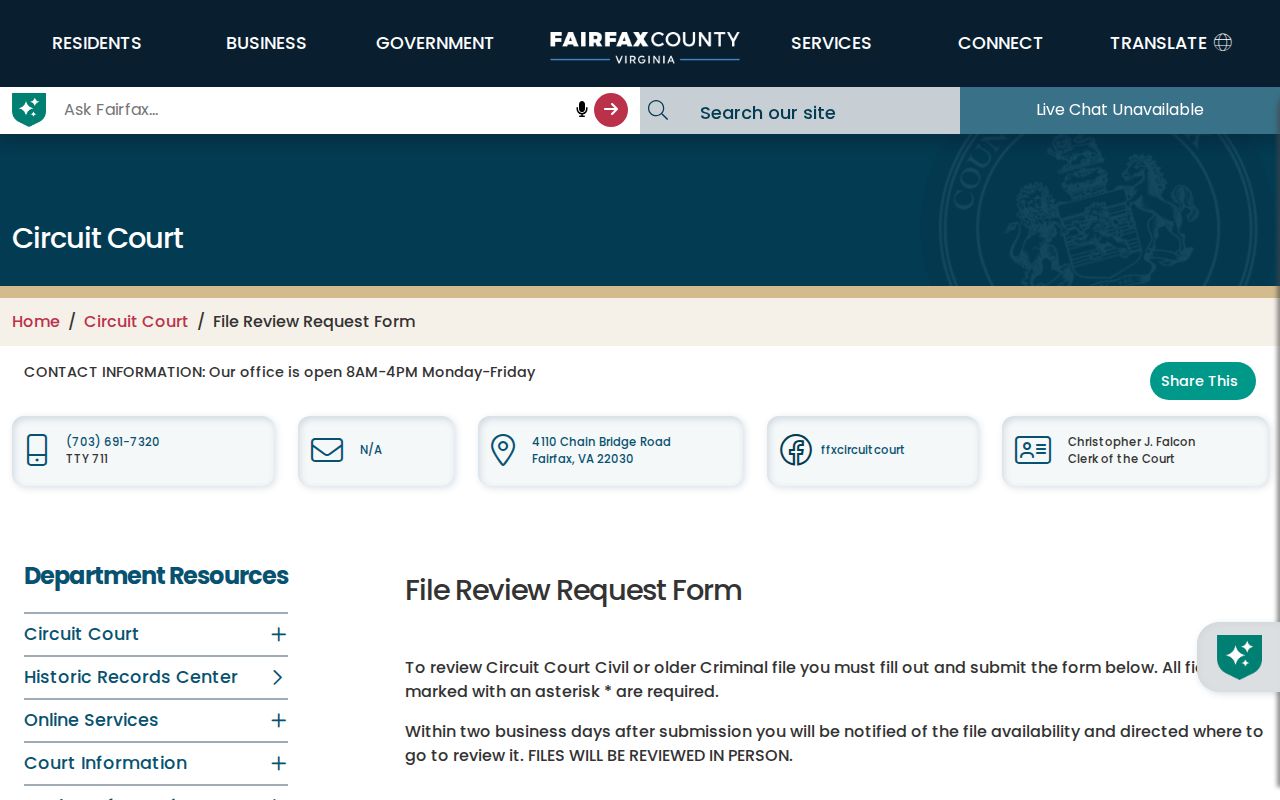
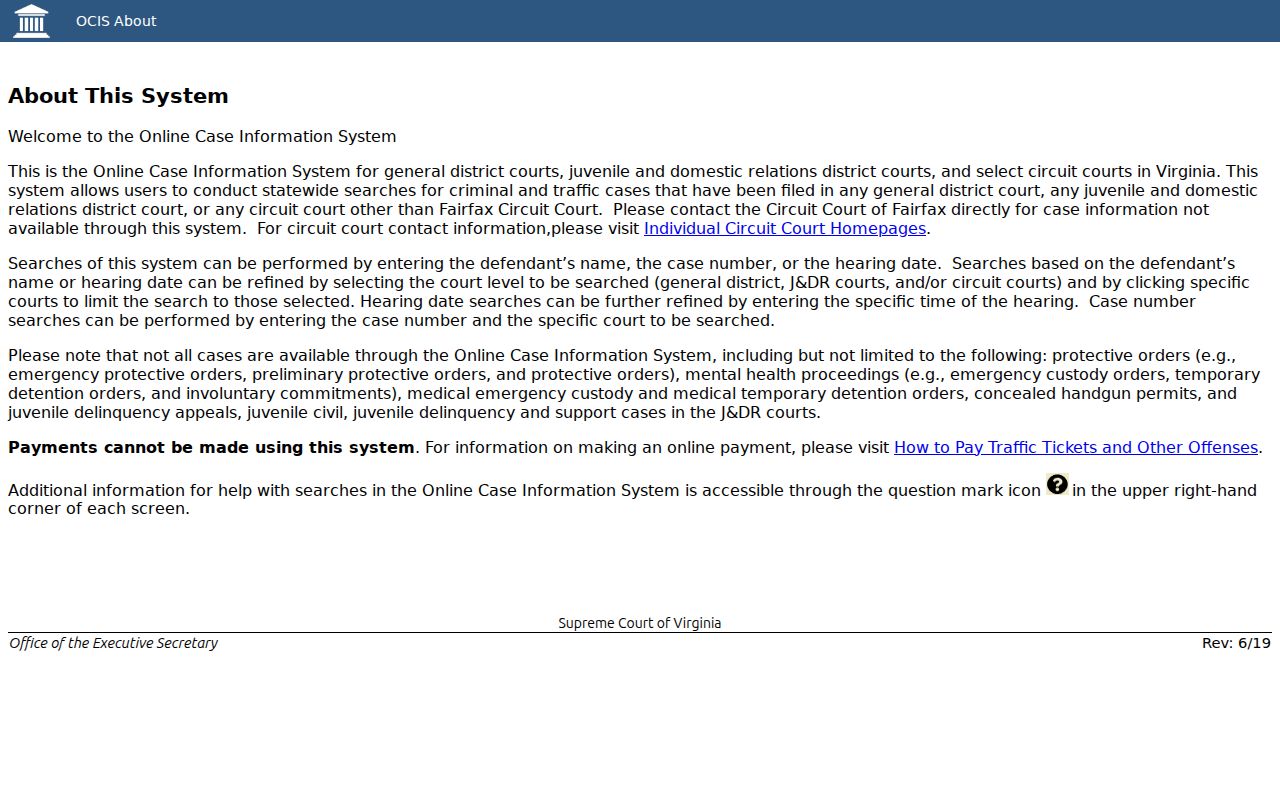
The request route works differently from a name search. Clerks treat it as file access to a case you can already identify. You supply requester type, contact and notification details, file and case type, case number, and full plaintiff and defendant names. Order-copy choices appear where the court offers them. Get the case number before you call the clerk. A statewide layer exists too. The Virginia Online Case Information System covers participating courts through filters for name, case number, hearing date, court level, and court type. Fairfax Circuit does not participate in OCIS. Fairfax Juvenile and Domestic Relations cases stay confidential, and another court's participation never turns them into a general online search. When an Oakton name match needs another jurisdiction check, Virginia's official case-information entry point opens that separate statewide court layer.
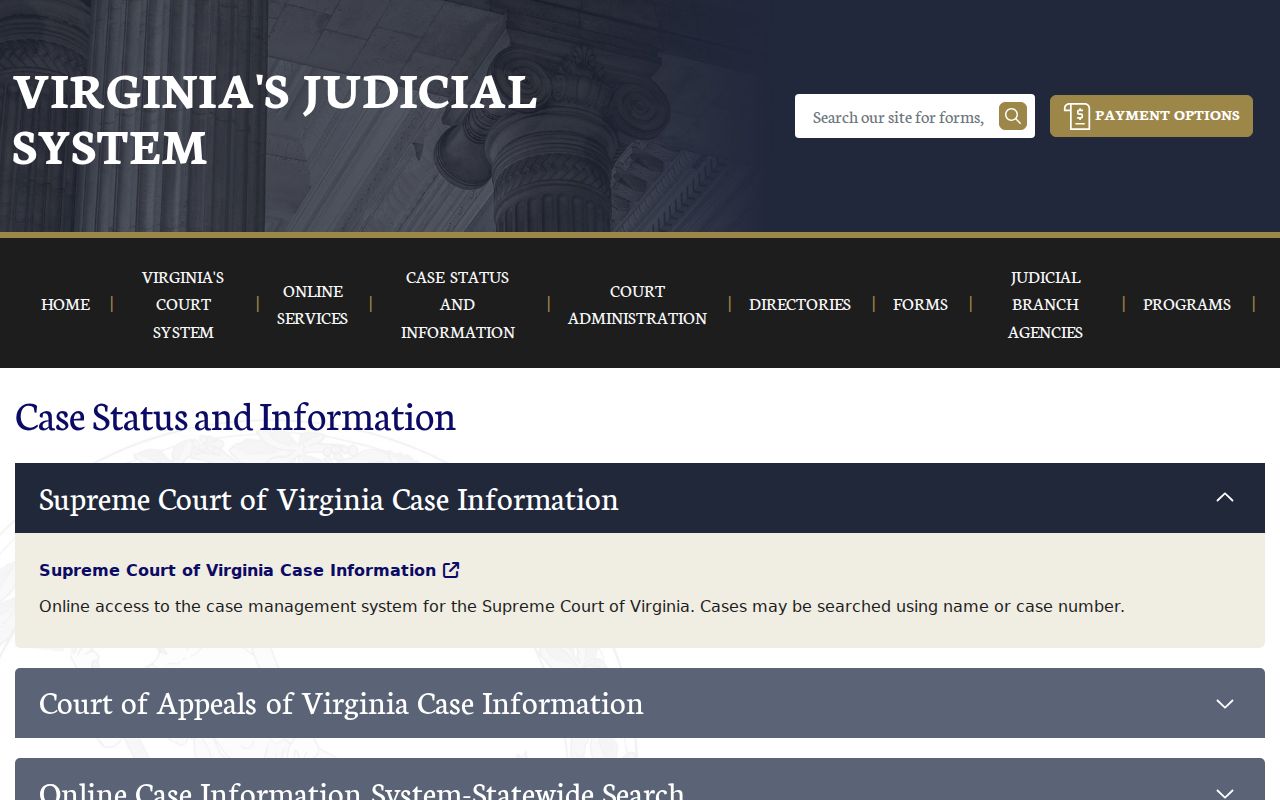
Check participation and the court level each session. A blank result only means the portal's coverage stops there, not that no record exists elsewhere. OCIS search help lists the available court and search filters and notes the protected categories it excludes.
Fairfax launched free eCaseSearch on July 8, 2024. That date explains why older Oakton court instructions still point people to the courthouse or subscriber access. A search hit alone is not proof. Common names return too many matches. Compare case number, party role, court, case type, and dates against a second source before treating the result as a lead for the same person.
Verifying Oakton Resident Records
One match is never a conclusion in an Oakton resident lookup. Treat a single hit as a lead, nothing more. Confirm identity by pairing an exact name with a second identifier. That could be an address, an age range, a date, a parcel number, an organization, or a case number. A surname may appear near a docket entry or a parcel map. That does not prove the same person. When two records disagree, keep both and ask the record custodian about a correction. Picking the result that simply looks right is how errors spread through a residents directory.
- Start with the full name and an Oakton address, approximate age, event date, parcel PIN, or organization. Avoid a common name by itself.
- Normalize the address in MAR, then compare iCare situs and mailing fields with Jade’s parcel geography.
- Search eCaseSearch by last name and optional first name. Record the case number, party role, type, dates, and the 100-result limit. Use OCIS separately for its participating courts.
- Use a vital, probate, deed, license, or entity record only when its date or relationship makes the match plausible. Request a custodian copy when a formal record is needed.
- Docket
- A court’s running index of a case’s public events, dates, filings, and actions. It is a lead, not a full case file.
- Index and image
- An index points to a record by name, date, or number. An image is the scanned record itself and may require a clerk request, Research Room visit, or CPAN access.
- Certified copy
- A copy issued by the custodian with its official certification. It is different from an online display or an ordinary photocopy.
Oakton Vital Record Windows
Oakton sits in Virginia, so its vital records trace back through the state's long paper trail. The Virginia Department of Health Office of Vital Records keeps birth and death series for 1853 through 1896 and again from June 1912 forward. Marriage records run from 1853 forward. Divorce files start in 1918. Access turns on age. Va. Code §32.1-271 opens birth records to the public after 100 years, while death, marriage, divorce, and annulment records carry a 25-year public period, and those current windows replace the older 50-year rule that earlier material described.
VDH's current forms and ordering information lays out the $15 certificate or search fee and the identity and relationship requirements that apply to modern requests.
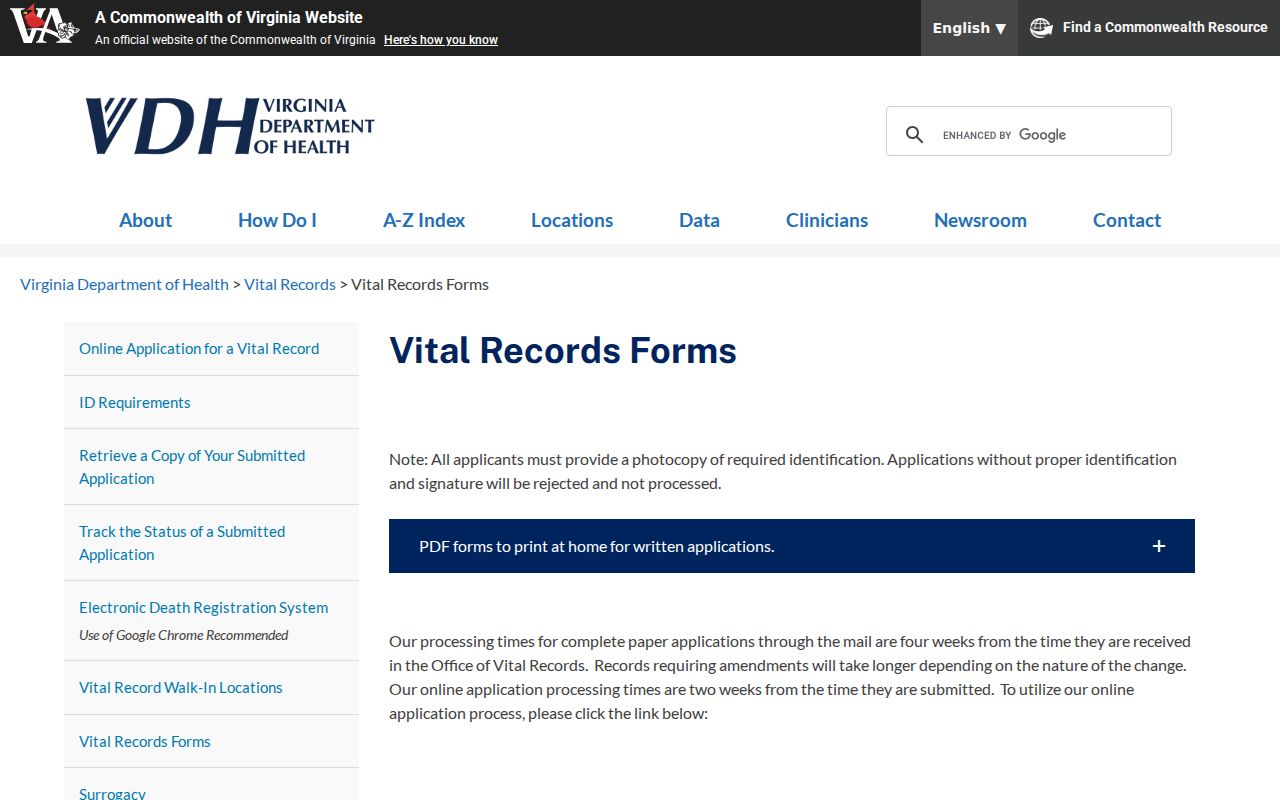
A public index gives you a name, a date, and a place. That is a lead, not a certified record. Modern certified copies go only to eligible requesters who present the required identification. Fairfax local health offices accept eligible walk-in requests on weekdays from 8 a.m. to 4 p.m. They generally close from noon to 1 p.m. When a record is not on hand locally, the office forwards the request to Richmond.
Older material lives elsewhere. The Historic Records Center holds local historical collections, including registers and microfilm. The Library of Virginia holds state historical collections as well. One caution matters. Birth and death searches carry a documented gap between 1896 and June 1912. State the date range you searched. Never treat that silence as proof about an Oakton person.
Oakton Probate and License Checks
Fairfax probate records are not one complete estate packet. They arrive as separate series. Will Books, inventories, accounts, and executor or administrator bonds each hold different pieces. The Probate Division, the Historic Records Center, CPAN, and court records also cover different periods and access routes. A relationship clue in any of them still needs support from a vital or deed record before you tie it to the same Oakton person.
Entities and professional credentials are a narrower check. The State Corporation Commission shows an entity's filing. DPOR License Lookup reports a regulated-license status by name, number, address, or type. Neither one proves a home address.
Virginia DPOR's official lookup helps here. Preserve the license number, type, status, and status date as a dated record lead.
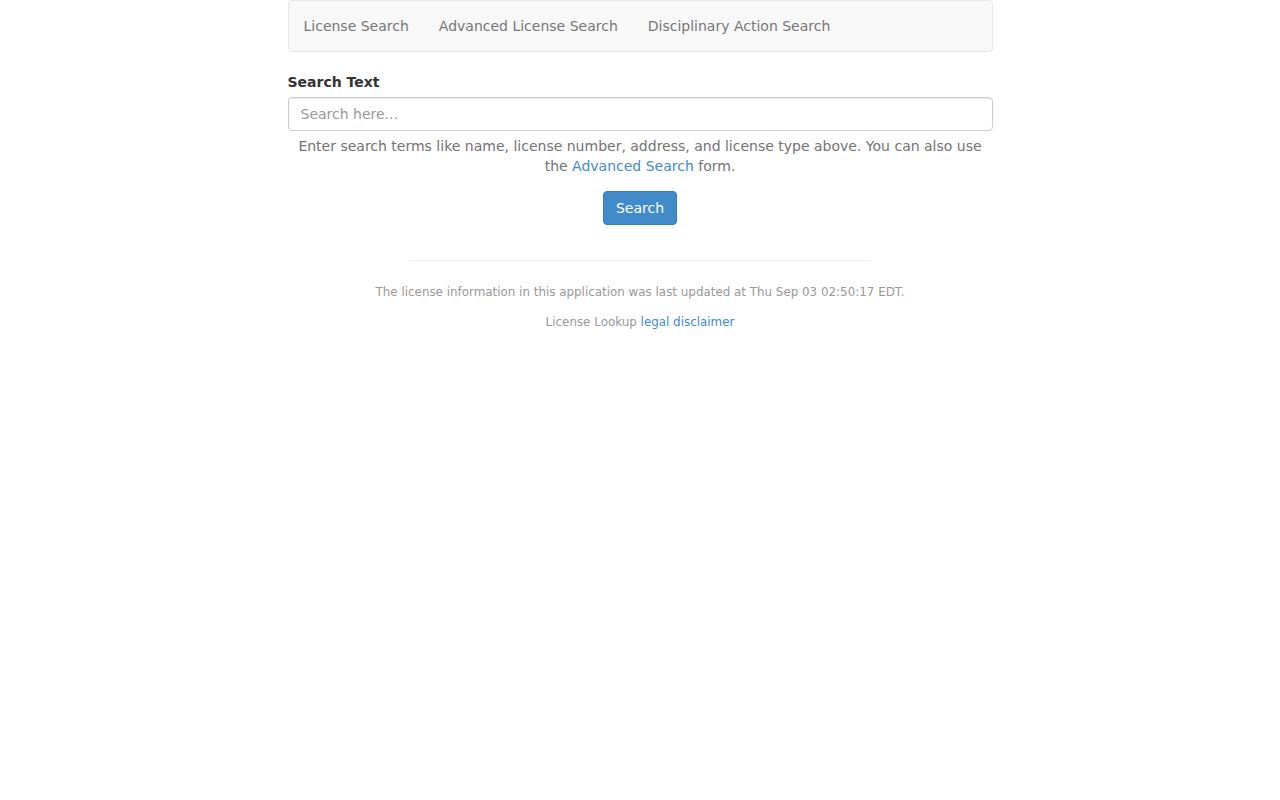
Use the legal name the board itself shows. Keep that result apart from any conclusion about where an individual lives. Virginia Department of Health Professions lookup covers current and expired professional records from January 1, 2000, with status, name, license, state, ZIP, and other published search options.
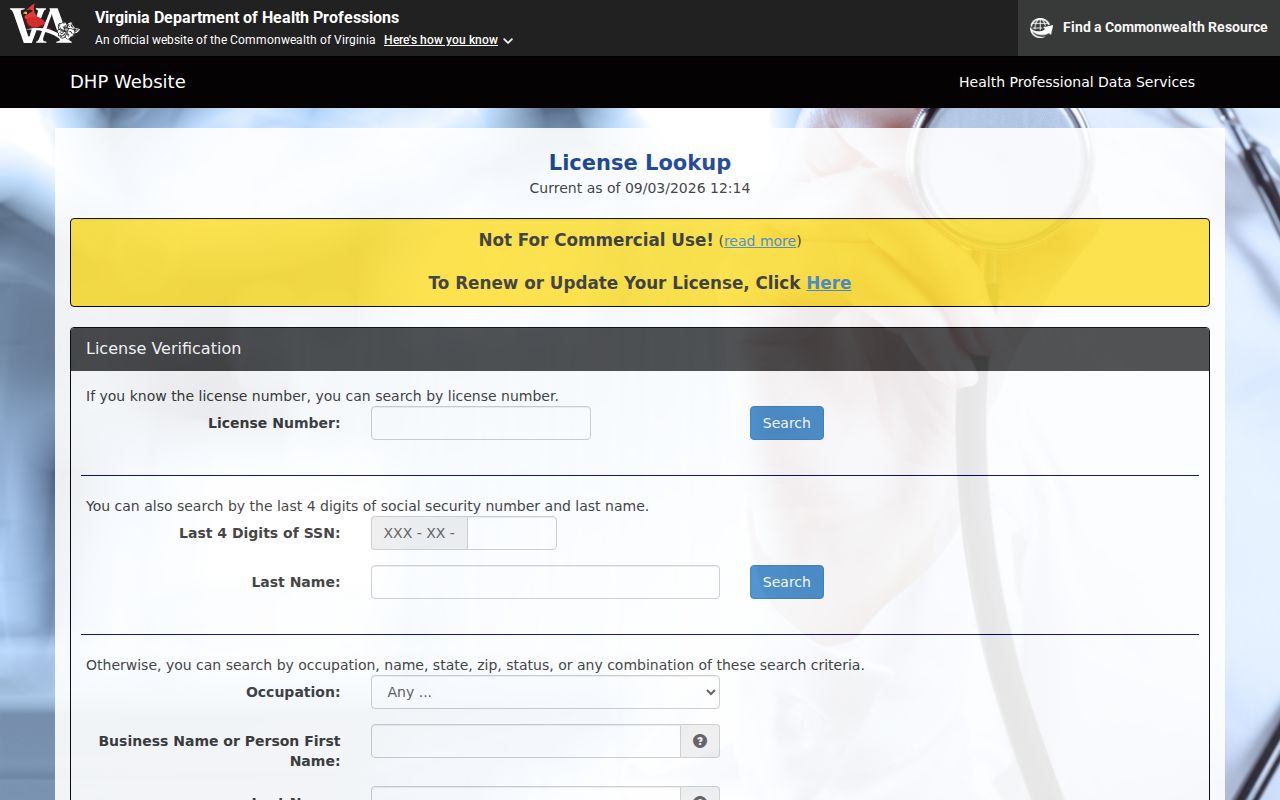
A DHP result verifies a license status under the board record. It says nothing about a person's Oakton residence.
Oakton Voter Lookup Boundary
The Virginia Citizen Portal serves the individual voter. Register, update an address, find a precinct, request an absentee ballot, or review a personal voting history there. The live form is JavaScript-rendered, so its exact field labels are not published for citation. Treat the portal as a personal tool, not a public Oakton street list. Virginia also skips party registration entirely.
Bulk voter-list access sits under Va. Code §24.2-405. The statute opens a path for specified authorized categories and purposes only. An open name-and-address roll is not among them. Viewing your own status, pulling a precinct result, and obtaining an authorized list are three different kinds of access. Protected voter records are a stop signal, not an invitation to fill gaps with surrounding Oakton records.
Oakton Resident Lookup Stop Signals
Virginia's Address Confidentiality Program, set out at Va. Code §2.2-515.2, gives eligible recently relocated survivors a substitute address and mail-forwarding route. Sealed court matters carry separate rules. Protected voter entries do too. Vital-record restrictions and redacted identifying details each follow their own rules. Do not triangulate nearby parcels to rebuild a shielded address. Do not use old directory entries or unrelated filings either. A missing record may simply mean the series is restricted. It may fall outside its date range. It may also never have been indexed in that Oakton source.
Lawful use. An Oakton resident lookup is for personal, lawful research. Using record leads to stalk, harass, threaten, or repeatedly contact someone can violate Virginia’s stalking law, Va. Code §18.2-60.3, and computer-harassment law, Va. Code §18.2-152.7:1.
Sensitive data belongs with its custodian. For a correction, return to the office that created the record and provide its identifier, source date, and jurisdiction. That single step protects both the person searched and the integrity of an Oakton resident lookup.