
Oakton City Directory Holdings
Oakton has no separate city clerk or city archive. For a city-directory search, Fairfax County’s historical repositories are the practical starting point. The Virginia Room at City of Fairfax Regional Library brings together regional history and genealogy material, including city directories, telephone books, yearbooks, newspapers, maps, manuscripts, photographs, oral histories, microform, and a CPAN station. The Historic Records Center, usually called HRC, preserves the county records that help test a directory lead against land, tax, probate, and court material.
The table identifies documented collection descriptions, not a proven run of Oakton volumes. That distinction matters. Research verified statewide and regional directory coverage, but did not verify a publisher, first year, last year, or open scanned Oakton entry. Before drawing a conclusion from a title, confirm the volume, year, place coverage, and page in the collection itself.
| Collection or record | Described years | Publisher or compiler | Where held | Access or use |
|---|---|---|---|---|
| Virginia city directories | 1873–1960 statewide description | Oakton publisher not verified | Virginia Room, library and university collections | Possible name, address, occupation, spouse, telephone, or organization notation |
| William & Mary Virginia directories | 1801–1929 | Collection publisher varies | University collection | Broader statewide directory context |
| Hill’s Arlington County Criss Cross | 1955–1976 reported run | Hill’s named in collection report | Virginia Room local collection report | Regional address-order lead, not proof of every Oakton year |
| Fairfax deeds | 1742–present; HRC originals 1742–1942 | Fairfax Circuit Court record series | Land Records, HRC, CPAN, Library of Virginia microfilm | Tract, legal description, and transfer evidence |
| Fairfax tax books | Real estate 1851–1980; personal property through 1919 | Fairfax County record series | HRC and Library of Virginia | Timing and tract clues for a historical place |
A title can be useful even when it does not say Oakton on its cover. Postal communities, Fairfax County geography, and directory market areas do not align neatly. Look for the address or locality in the volume, then preserve exactly what the volume says instead of silently converting it into a modern locality label.
Oakton Directory Research at Virginia Room
The Virginia Room is the strongest starting place for historical Oakton directory work because it combines reference material with equipment. A researcher can consult regional directories and telephone books, then move to newspapers, yearbooks, maps, manuscripts, or oral histories without treating one kind of record as conclusive. Its microform equipment and CPAN station also make the room a bridge from a name or address in a printed volume to county record systems.
Begin with the narrowest confirmed fact, such as a full name, an exact street form, or a year supplied by a family document. Ask staff or consult the catalog to identify the actual shelf run. Record the directory title, publisher, year, page, and spelling as shown. If a likely volume is unavailable, the next route is an archival finding aid, the HRC, or Library of Virginia microfilm rather than a guess about coverage.
View the Historical Society of Fairfax County collection record as a related archival lead before planning a visit. The exact directory volume still needs to be checked at the shelf or through staff.
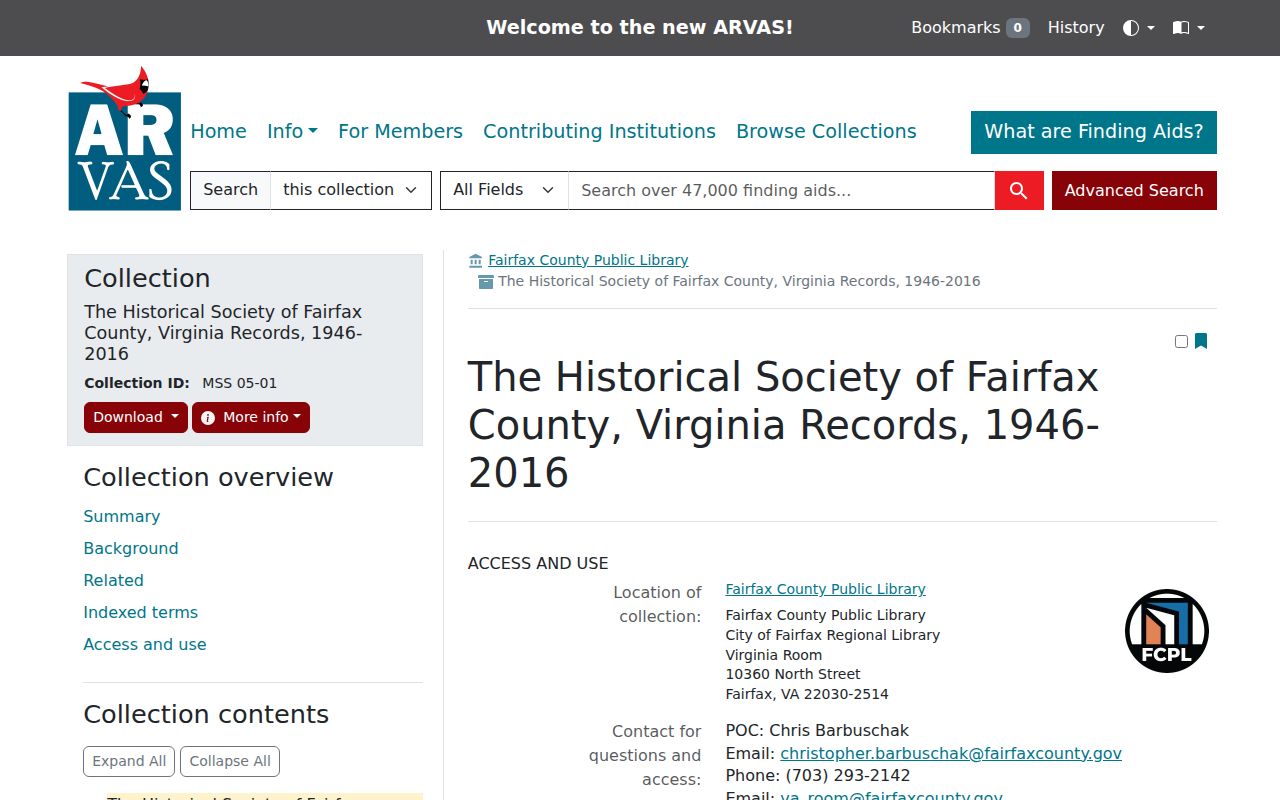
The collection screen is a reminder that a historical society record can explain what an archive holds without being a searchable roll of Oakton residents.
Oakton ARVAS Collection Trails
ARVAS provides collection-level finding aids for the Virginia Room and related historical material. It is especially useful when a directory result needs context from photographs, manuscripts, local-organization records, oral histories, or biographical files. A finding aid identifies a collection and its arrangement; it does not establish that every named person appears in every folder or that a person lived at a particular address.
The Historical Society of Fairfax County collection listed in ARVAS covers 1946–2016 and is useful for organizational history and events. Search the finding aid for a place, surname, or organization, note the collection identifier, and then follow the repository’s viewing rules. Pair any promising name with the dated directory or county record that actually supports the claimed connection.
Use the Historic Records Center holdings page as a discovery lead for the original county material. The follow-up step is to verify the relevant folder, volume, or item, not to treat a collection description as a full list of people.
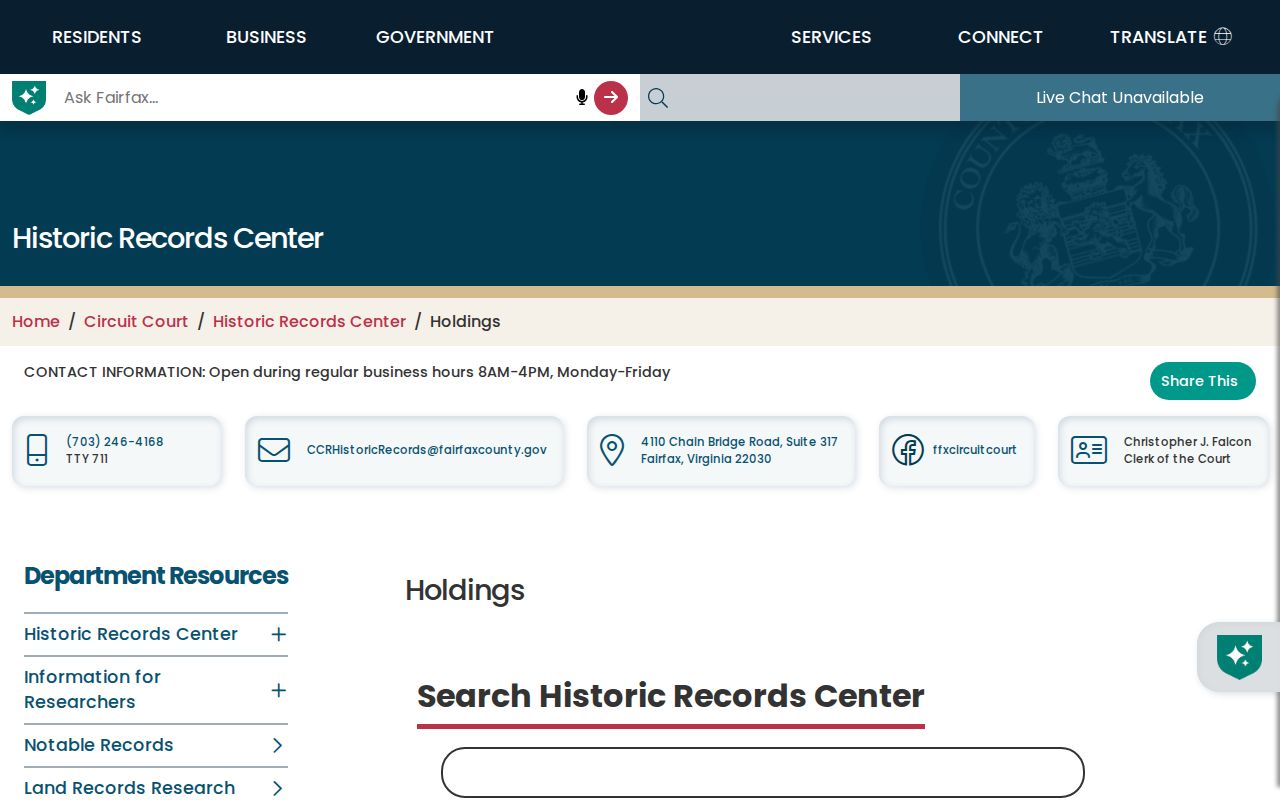
HRC holdings complement archival discovery by keeping original deeds, wills, tax books, registers, and court papers that can confirm a date or tract.
Reading Oakton City Directory Evidence
No verified Oakton page or publisher run was available in the research, so there is no sample entry here. Directory conventions vary by publisher and year. When an inspected volume does cover the relevant place, its entries may include a name, address, occupation, and sometimes a spouse, telephone number, or organization notation. Those are possible fields, not promises that each volume contains them.
| Name line | Use the spelling, initials, suffix, and sequence printed in that specific year. |
|---|---|
| Address | Compare the street form and number with the volume’s date and any historical-address evidence. |
| Occupation field | Read it as a period description, then confirm identity with an address or another dated source. |
| Family notation | A spouse or other notation may appear, but its format depends on the publisher. |
| Telephone or organization | When printed, these can guide further research but do not establish current contact information. |
- Criss-cross directory
- An address-order section that can point from a street location to a printed name, when that volume includes the area.
- Householder index
- A name-focused index within a volume; its scope is defined by the publisher and year.
- Abbreviation key
- The publisher’s explanation of shortened terms, usually found near the front of a directory and worth recording before interpreting an entry.
Do not fill a blank field with assumptions. An omitted name can reflect the title’s coverage, a listing practice, a different spelling, an address change, or a gap in the series. A careful citation preserves the title, year, page, repository, and the exact entry that was actually seen.
Oakton Criss-Cross Directory Limits
Hill’s Arlington County Directory and Criss Cross volumes are reported for 1955–1976 in a local collection description. They can provide an address-order lead for Northern Virginia research. Their existence does not prove that every Oakton street, household, or year appears. Inspect the geographic scope and the relevant page before using it to connect a name with an Oakton address.
This is also where a directory search should slow down. Postal lines may say Oakton, Fairfax, Vienna, or another nearby locality even when the county and tract are the same. Compare the street name, number, and year with Fairfax’s county records. The backward address workflow on the Previous Residents page explains how a directory lead can be tested against a deed chain and historical address status.
Evidence note. A regional criss-cross entry is a dated research lead, not proof that an address had the same numbering, boundary, or household at another time.
Oakton Directory Years and Households
Trace a historical household with a fixed sequence. Start with a confirmed spelling and date, identify the actual directory volume, and read the entry together with its abbreviation key. Then compare the same name and address in the next available dated volume. A move, an altered street form, or a new notation is a lead to verify, not a conclusion by itself.
- Choose a confirmed name, address, or date and locate a volume that demonstrably covers the place.
- Record the exact year, title, publisher, page, and wording of the entry.
- Check the adjacent available directory years for the same spelling and address form.
- Pair a directory year with the appropriate federal census release, using an exact matching identifier.
- Test the match with a tax book, deed, obituary, or probate record tied to the same tract or person.
Federal census schedules provide periodic household checkpoints rather than annual listings. A directory can narrow a time window, while the census can help distinguish people with the same name. The matching identifier matters: an address, a legal description, a page citation, or a family relationship is stronger than a name alone.
Oakton Owner Maps Before Directories
Fairfax’s 1860 owner-map project is a useful route when printed directories are thin or unverified. The project includes more than 2,300 pages of owner maps and collective biography. An owner name or acreage reference can point toward deeds, wills, chancery papers, and later tax material. It is a geography and history lead, not a substitute for confirming that an older tract matches a modern Oakton parcel.
Confirm the tract through the legal description, deed chain, tax district, neighboring parcels, and current map evidence. This is important in a place where later subdivisions and changed street forms can obscure the older description. A name on a map may be the beginning of research, but the location still must be matched before it is connected to a modern address.
See the Fairfax 1860 map project for the owner-map and biography route.
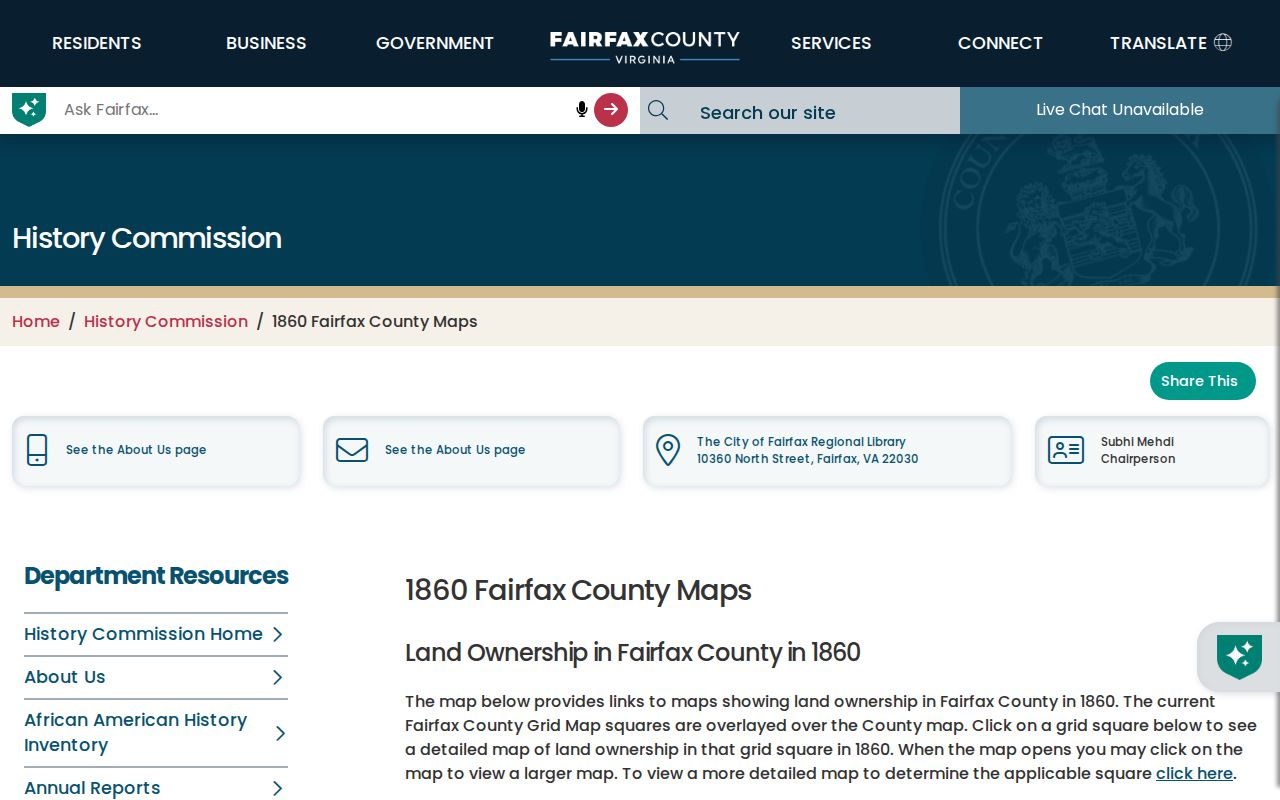
The map resource shows why a historical owner name needs parcel and tract verification before it becomes part of an Oakton family-history account.
Oakton Records Preservation Watch
On June 24, 2025, Fairfax Circuit Court announced a $21,450.60 preservation grant for the 1879 Atlas of Fairfax County and the 1892, 1900, and 1910 Land Tax Books. The materials were associated with the HRC and may be in preservation, newly digitized, or otherwise unavailable in the way an older finding aid suggests. That makes the grant a practical research note as well as a local records story.
For early Fairfax research, keep a loss log. Civil War destruction affected original wills, deeds, loose papers, many deed books from 1763–1819, and pre-war minute books. The correct result can be “not found in this inspected series,” “series does not cover the date,” or “record may be missing,” followed by the repository and range checked. Tax books, map references, chancery, and neighboring-tract records may then provide a separate path.
Oakton City Directory Search Method
Keep every historical claim tied to a source that can be checked again. For directory work, that means the exact volume and page. For a tract connection, it means the parcel identifier or legal description. For a deed or tax reference, it means the book, page, volume, or repository. This small record of evidence prevents a plausible name match from turning into an unsupported family story.
Use the Virginia Room and ARVAS for collection discovery, the HRC for original county materials, and county land or tax records when an entry needs a place-based check. A person can appear under a maiden name, middle initial, shortened name, or changed street number. Resolve those differences with dates and matching identifiers, not by choosing the most convenient result.
Careful use. Historical material supports family and place research; do not use it to pursue, harass, or expose a living person.