
Search Oakton Resident Records
To search the Oakton residents directory, start with the detail you can verify: a full name, a street address, a parcel number, or a date. Oakton is an unincorporated Fairfax County community, so Fairfax County and Virginia offices keep the relevant records. A current address is best checked through county address and parcel tools. A past household may be clearer in a directory, tax book, deed, or probate record. Each result needs a date and a second identifier before it can be tied to the right person.
An owner record can point to a parcel, but it does not list everyone living there. A court index can give a case lead, but not a current location. Work from the most specific record outward, and keep the record number, source URL, and date checked with each result.
- Normalize an address in Fairfax County's Master Address Repository, then save the parcel PIN and the returned postal locality.
- Use the Fairfax assessment card to compare the situs address, mailing address, legal description, and deed book or page lead.
- Follow that lead through Fairfax Circuit Court land records, the courthouse Research Room, or CPAN when subscription access is appropriate.
- For a dated household, check the Virginia Room, Historic Records Center, and Library of Virginia routes before drawing a conclusion.
- Ask the actual custodian for a copy, correction, or restricted record. Virginia FOIA requests should name an existing record and describe it precisely.
Note: Oakton postal labels, ZIP codes, voting districts, and Census geography can differ for the same parcel, so retain the field returned by each custodian.
Oakton Resident Records Custodians
There is no separate Oakton municipal clerk, court, or assessor. The Fairfax Circuit Court, Fairfax County Department of Tax Administration, county GIS and addressing staff, and Fairfax County Office of Elections form the core local records network. Virginia agencies add vital records, court information, licensing, and business filings. The office matters as much as the search result because it determines whether a record can be inspected, copied, corrected, or certified.
Fairfax Circuit Land Records
4110 Chain Bridge Road, Suite 317
Fairfax, VA 22030
703-691-7320
Fairfax DTA Assessment
12000 Government Center Parkway, Suite 357
Fairfax, VA 22035
703-222-8234
Fairfax County Elections
12000 Government Center Parkway, Suite 323
Fairfax, VA 22035
703-222-0776
Oakton Addresses Begin in MAR
The Fairfax Master Address Repository, known as MAR, is the address authority to use before an Oakton residents directory search. Its Address, Parcel, and Street modes can return an address number, street, ZIP, parcel ID, subdivision, district, and current or historical status. A street result is an address inventory, not a household roster. That distinction keeps a property search from being mistaken for evidence about every person at an address.
| MAR control | Useful Oakton result | How to use it |
|---|---|---|
| Address mode | Normalized street and parcel | Confirm number, street type, city, and ZIP. |
| Parcel mode | PIN and subdivision | Carry the PIN into iCare and a deed search. |
| Street mode | Address rows and status dates | Check current, historical, or all status and export only when needed. |
| Created and expired filters | Address history clue | Use them rather than assuming an old street number stayed the same. |
Fairfax announced an improved MAR experience in July 2026. The screen may change, but the returned address, PIN, status, and effective-date fields remain the useful evidence.
Oakton Parcel Cards Need Context
Fairfax iCare is the public assessment portal for an Oakton parcel. Its address form has Number, Unit#, Street, optional Suffix, sorting controls, and a Street wildcard. A card can show an owner display, mailing and property addresses, map/PIN, legal description, sales, values, taxes, land use, and a deed book/page reference. The Department of Tax Administration updates assessment information twice weekly and assesses as of January 1.
Use the Fairfax iCare assessment portal as an address-to-parcel source. The screenshot below shows the official portal, which is the starting point for a parcel trail rather than a claim about every occupant.
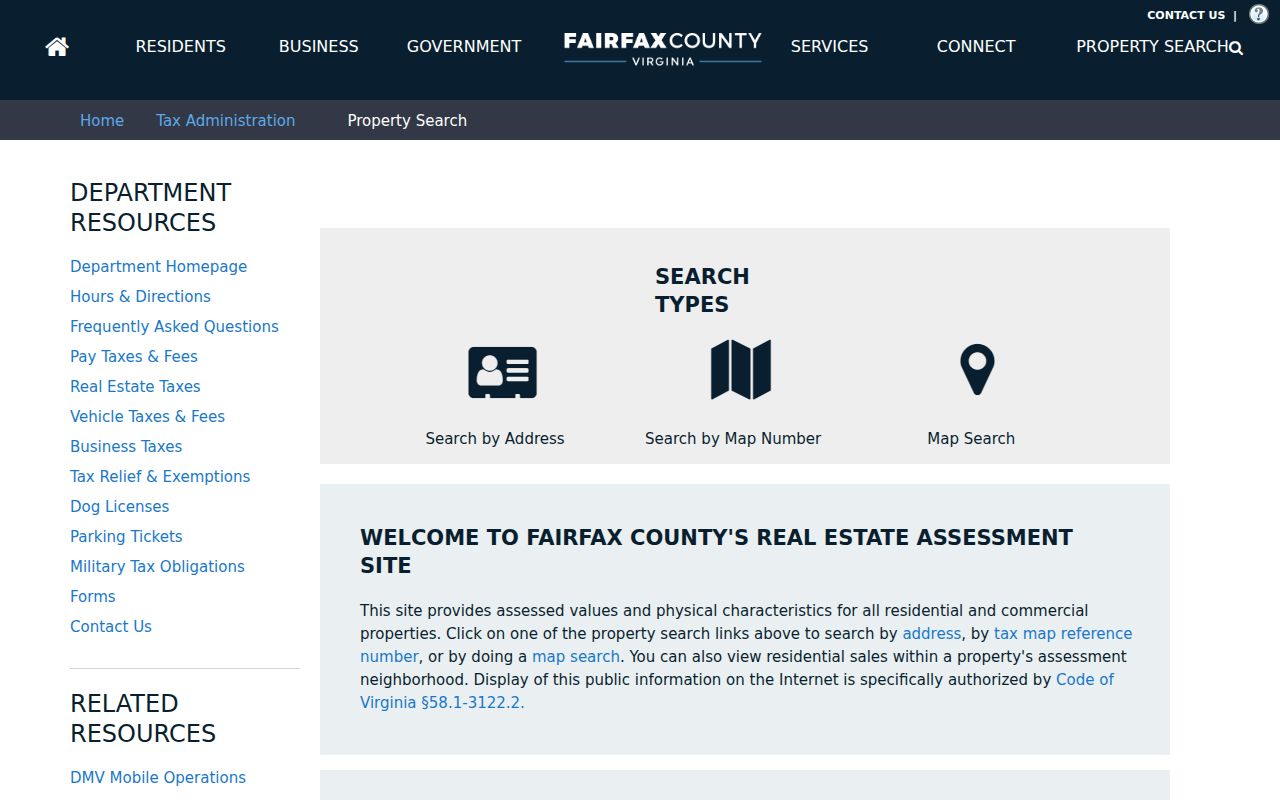
Compare its situs and mailing fields carefully. A mailing address can be outside Oakton, and the county permits some owners to withhold an online owner display while retaining lawful office access.
- Parcel PIN
- A county identifier for a tax parcel, not a statement of who occupies it.
- Situs address
- The physical property location used by the assessor.
- Mailing address
- The address used for tax correspondence, which may belong elsewhere.
- Index
- A finding aid that points to a record; it is not the record image or a certified copy.
Oakton Deed Trails Use Fairfax Books
Once iCare supplies a legal description or deed book/page, Fairfax Circuit Court Land Records can connect the parcel to an instrument trail. Digital land-record images extend from 1742 to the present. The third-floor Research Room provides public terminal access, CPAN offers subscriber internet access, and the Historic Records Center holds original deed books from 1742 through 1942. A copy request needs an instrument number or book/page.
Search the current owner and prior seller as grantee and grantor, then read the legal description and any prior reference after “AND BEING.” Names can be split, changed, or indexed in an unexpected order, especially on easements. A map report is a useful locator, but the deed, plat, release, or court order is the stronger title source.
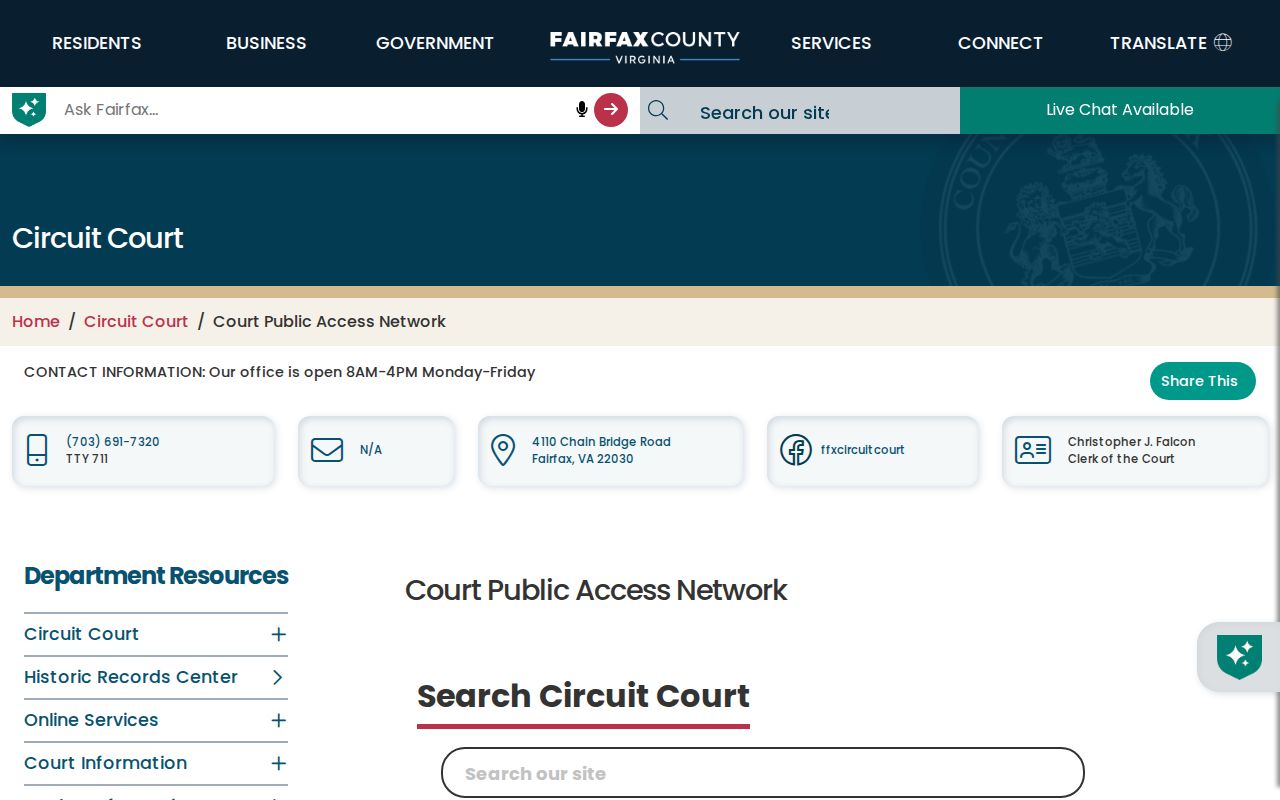
CPAN’s public access information explains the Court Public Access Network and its records families. The image documents the access route, while the courthouse terminal remains an option when an online subscription is not suitable.
For historical research, pair the instrument reference with tax books, maps, and directories rather than treating a single transfer as a complete household history.
Note: Certified land-record copies cost $2 per document plus $0.50 per page, and mailed copy requests generally take about two weeks.
Current Oakton Resident Directories
No single current list identifies every Oakton resident. Official sources each answer a narrower question. The assessment roll identifies a displayed owner and parcel details. MAR resolves a location. Court, probate, business, and licensing indexes can verify a dated public filing. The voter portal serves the voter’s own registration, polling, district, absentee, and voting-history functions, while Virginia law controls distribution of fuller voter lists.
| Oakton source | What it can confirm | Custodian | Access route |
|---|---|---|---|
| iCare assessment | Owner display, parcel, sales, values | Fairfax DTA | Free public portal and DTA contact |
| Land instruments | Grantor, grantee, legal description | Fairfax Circuit Court | Research Room, CPAN, copies |
| Citizen Portal | Voter-facing status and district functions | Virginia Elections | Individual portal; lists are controlled |
| eCaseSearch | Public Circuit docket leads | Fairfax Circuit Court | Free index from October 18, 2004 |
| Association inventory | Community contact names | Fairfax County | Voluntary list, not membership proof |
A name match needs context. Use a parcel, case number, date, exact legal name, or historical address to distinguish people with the same name. For a name-first trail, the Oakton resident lookup path focuses on cross-checking one person without turning any single index into proof of residence.
Oakton Court and Probate Leads
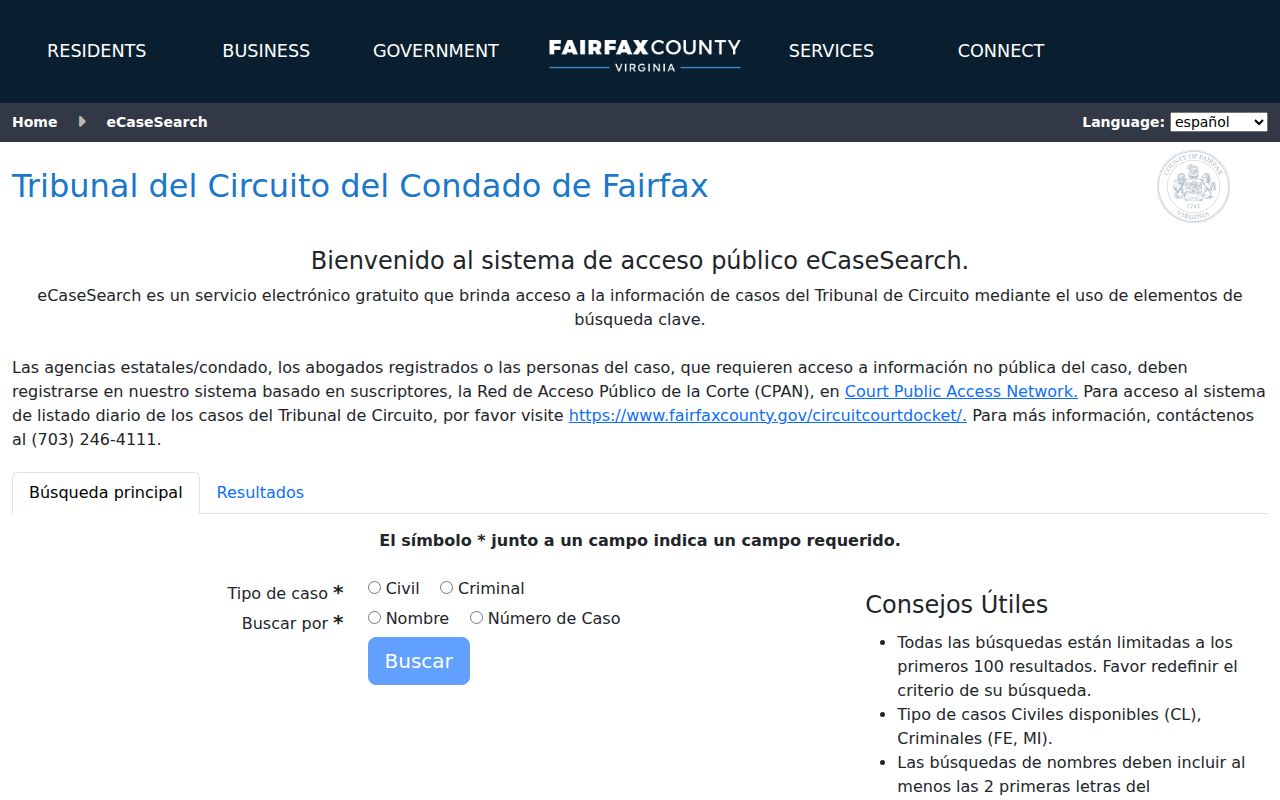
Fairfax eCaseSearch is a free Civil and Criminal index. It searches by Party Name or Case Number. A last name or company name needs at least two letters, a first name is optional, and results are capped at 100. The index begins October 18, 2004, supplies public docket-style information, and does not include case documents or sealed cases. It is a lead that requires the case number, court, party role, and date.
Use the Fairfax eCaseSearch screen to start a carefully bounded name search. Its image illustrates the official index, not a conclusion about identity or current Oakton residence.
When a public file must be inspected, use the Circuit Court file-review request. Probate leads are different: wills, inventories, accounts, fiduciary bonds, and chancery papers may be separate series, and an estate is not necessarily one file.
Oakton Vital Record Dates Matter
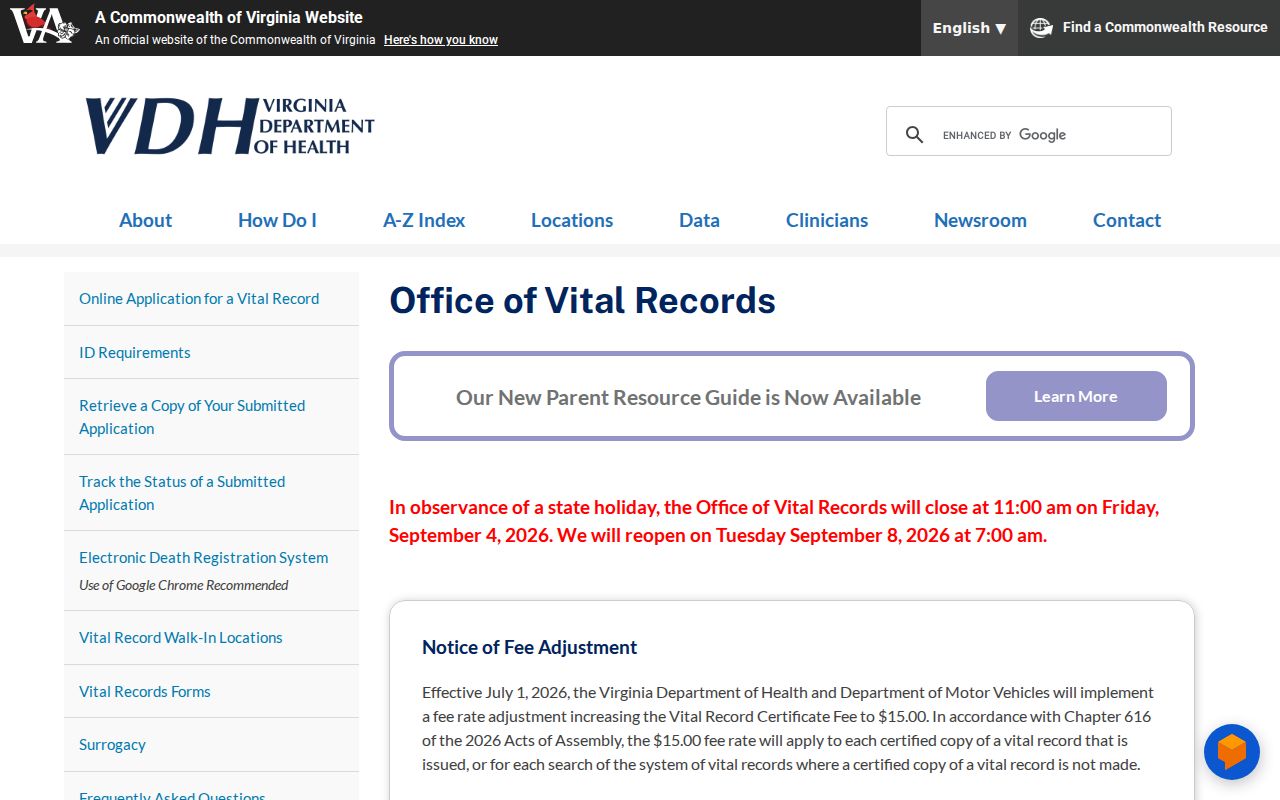
Virginia Department of Health records have their own timing and eligibility rules. Birth and death series cover 1853–1896 and June 1912 to the present; marriages begin in 1853 and divorces in 1918. Under Virginia Code §32.1-271, a birth record reaches its public period after 100 years, while death, marriage, divorce, and annulment records reach it after 25 years, subject to exceptions and redactions. An index and a certified certificate are different access questions.
The Virginia Office of Vital Records sets the statewide route. The screenshot points to the official office, where current materials list a $15 certificate or search fee and require identity documentation for modern requests.
Fairfax health offices accept eligible walk-in requests on weekdays, generally 8 to 4 with a noon to 1 closure. If a local office cannot locate a record, it can forward the search to Richmond.
Oakton Voter Information Stays Controlled
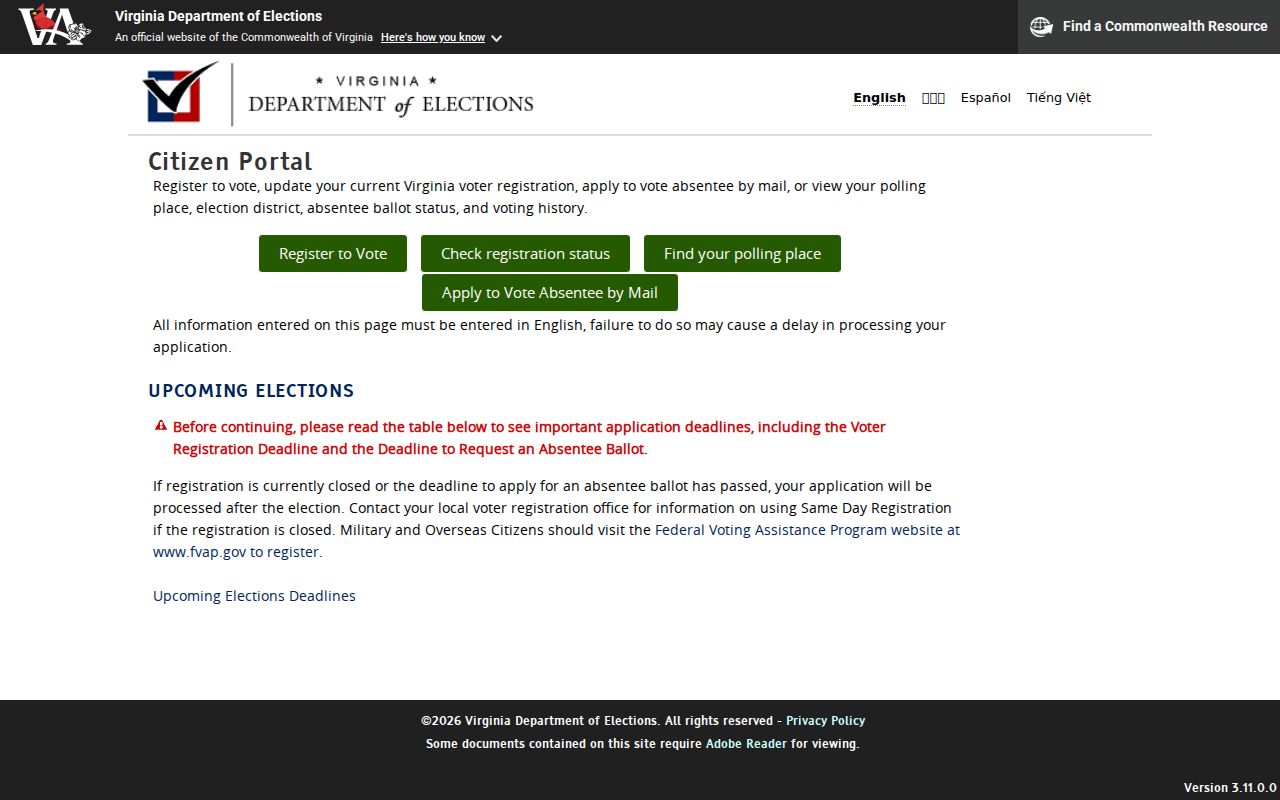
Virginia’s Citizen Portal is an individual-facing service for registration status, address updates, absentee status, polling places, election districts, and voting history. It is not a public by-street Oakton residents directory, and Virginia does not register voters by party. Virginia Code §24.2-405 allows voter-list distribution only to specified requesters for prescribed purposes. Protected and substitute addresses must never be reconstructed from other sources.
Virginia’s Citizen Portal is the official place to check the available voter-facing functions. The view below is a source reference; exact live form labels should be read in the rendered portal rather than guessed.
Fairfax Elections can resolve registration and precinct questions. A precinct, postal city, and Fairfax supervisory district may not line up with one another, so keep each geography in its own field.
Historical Oakton Resident Directories
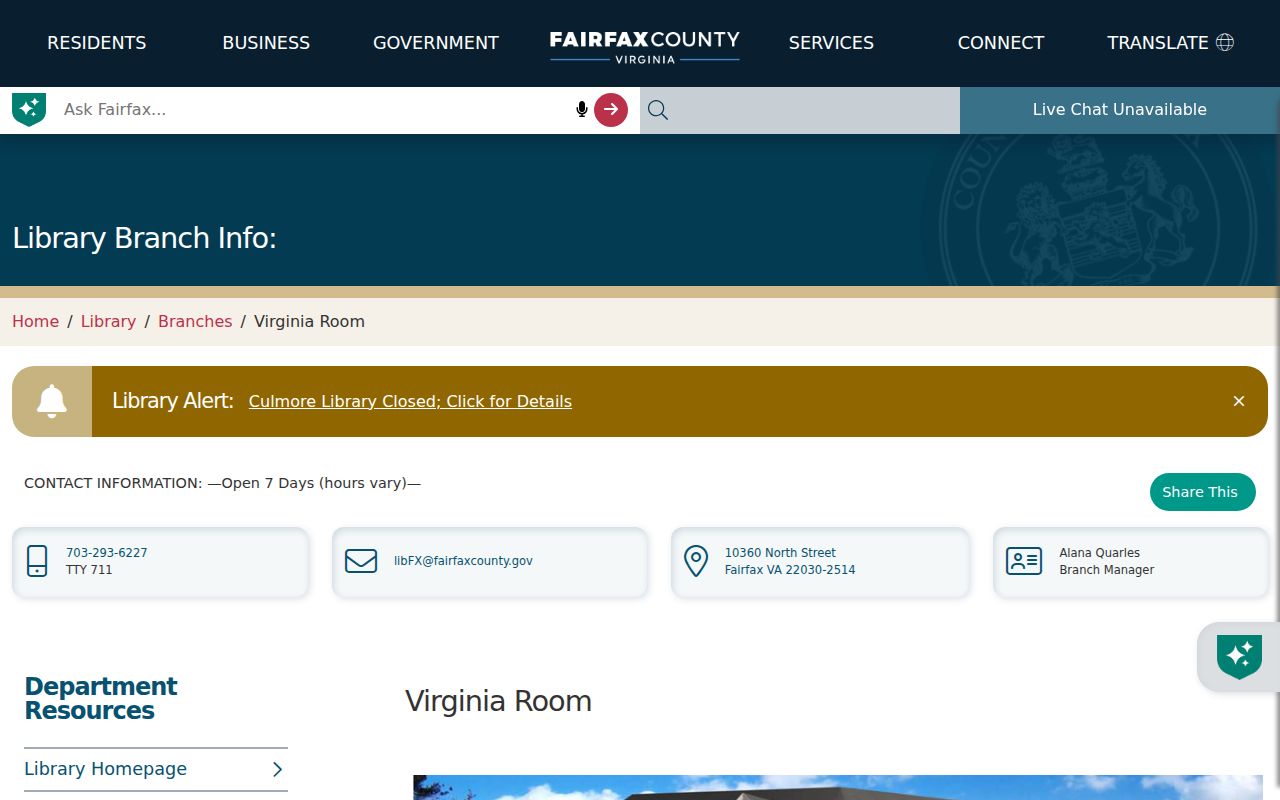
The Virginia Room at City of Fairfax Regional Library is the practical shelf for historical Oakton work. It holds city and telephone directories, yearbooks, newspapers, maps, manuscripts, photographs, oral histories, microform, and a CPAN station. ARVAS adds collection-level finding aids, while the Historic Records Center and Library of Virginia hold deeds, tax books, vital registers, wills, and other county series. These sources are complementary: a directory may identify a dated address, while a deed or tax book ties it to a tract.
Visit the Fairfax Virginia Room for the local-history route. This source image shows the official library resource, whose equipment can bridge a modern parcel lead to historical microfilm.
The statewide Virginia city-directory collection is described as 1873–1960, and Hill’s Arlington County Criss Cross run is reported for 1955–1976. Neither establishes a complete Oakton shelf run, so cite the volume and page actually inspected. The Oakton Directory Book details how to read those dated entries.
Oakton Records Have Gaps
Fairfax County was formed in 1742, but Civil War destruction affected original wills, deeds, loose papers, many 1763–1819 deed books, and prewar minute books. A no-result therefore means only that a particular index or surviving series did not provide a result. Tax books, maps, chancery records, and neighboring tract references can sometimes supply a separate lead.
Fairfax’s preservation work is also changing access. A June 24, 2025 grant funded preservation of the 1879 Atlas and the 1892, 1900, and 1910 Land Tax Books. Material under preservation may be unavailable briefly or may appear through a new access route later.
Oakton Searches Require Privacy Stops
Public availability is field-specific. An Address Confidentiality Program record, protected voter status, juvenile matter, sealed case, shelter address, or other safety signal ends the address trail. Virginia’s Address Confidentiality Program is authorized by Va. Code §2.2-515.2 and uses a substitute address for eligible participants. It does not make a historical record a reason to expose or reconstruct a current location.
Virginia’s stalking and computer-harassment laws provide the safety boundary. When a record appears wrong, contact the agency that created the field, preserve the source URL and retrieval date, and request correction through the custodian instead of silently combining conflicting results.
Oakton Business and License Checks
A business filing or professional license can confirm an official status, not a household address. The Virginia State Corporation Commission Clerk’s Information System searches Entity Name or Entity ID and returns details such as legal name, formation date, status, and filing address. DPOR and DHP offer status searches for relevant professional records, while PLUS and LDIH connect an address or parcel to building and site history.
Use the Virginia SCC Clerk’s Information System when the question concerns a named entity. The official search image is included as a source cue, while any Oakton connection still needs a matching parcel, record date, or filing identifier.
A filing may show a registered office or agent. It does not establish that a named person lives at the business address or owns the surrounding parcel.
Oakton Sources Need Dated Evidence
Record systems change. iCare assessment details update twice weekly, MAR and PLUS interfaces evolve, and archival materials can move into preservation or appear in a new digital collection. Write down the source, web address, record identifier, displayed field, and date checked. That small record makes it possible to explain why two sources differ or why an earlier result no longer appears.
When Fairfax systems disagree, do not merge the fields by guesswork. Ask the agency that created the address, assessment, instrument, court, or election field. A focused request that names a parcel PIN, case number, instrument, date range, or subdivision is more useful than a broad request to identify a person. Virginia FOIA permits requests for existing records with reasonable specificity and does not require a custodian to create a new database.
Note: A source date and a precise record identifier are the best safeguards against turning an Oakton residents-directory search into an unsupported match.